Follow this guide to analyze giving in your organization by age range. For example, you can answer the question:
How are people in the 20s and 30s giving compared to those who are 50+?
-
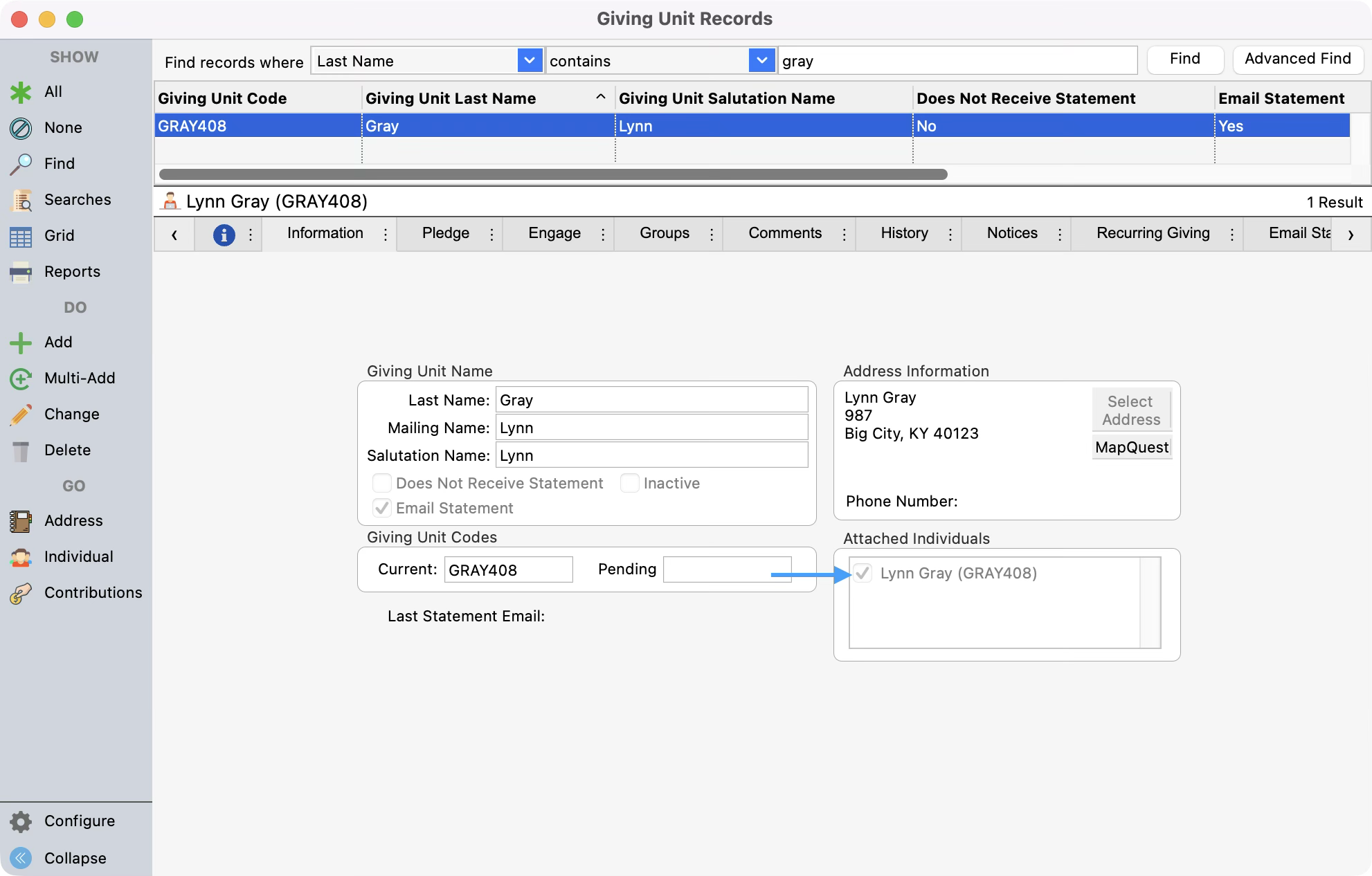
You’ll first want to make sure that your Giving Unit records are all linked to Individual records. Since we’re analyzing age groups, we’ll be using the birthdate field on the Individual record to pull in the information that we need.
-
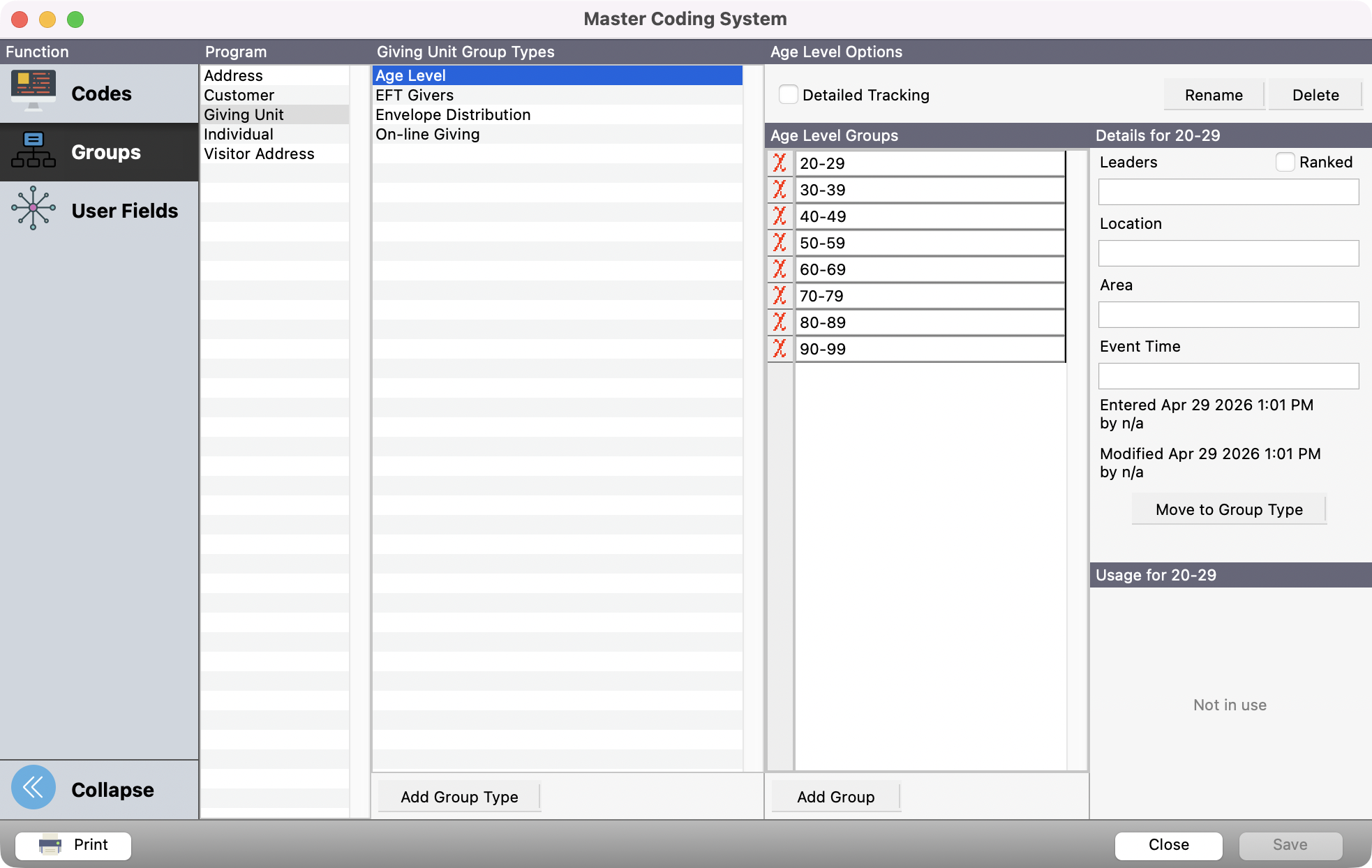
Next, you’ll want to create a Giving Unit Group Type in the Master Coding System. Set up a Giving Unit Group Type for Age Level and then Groups for different age ranges.
-
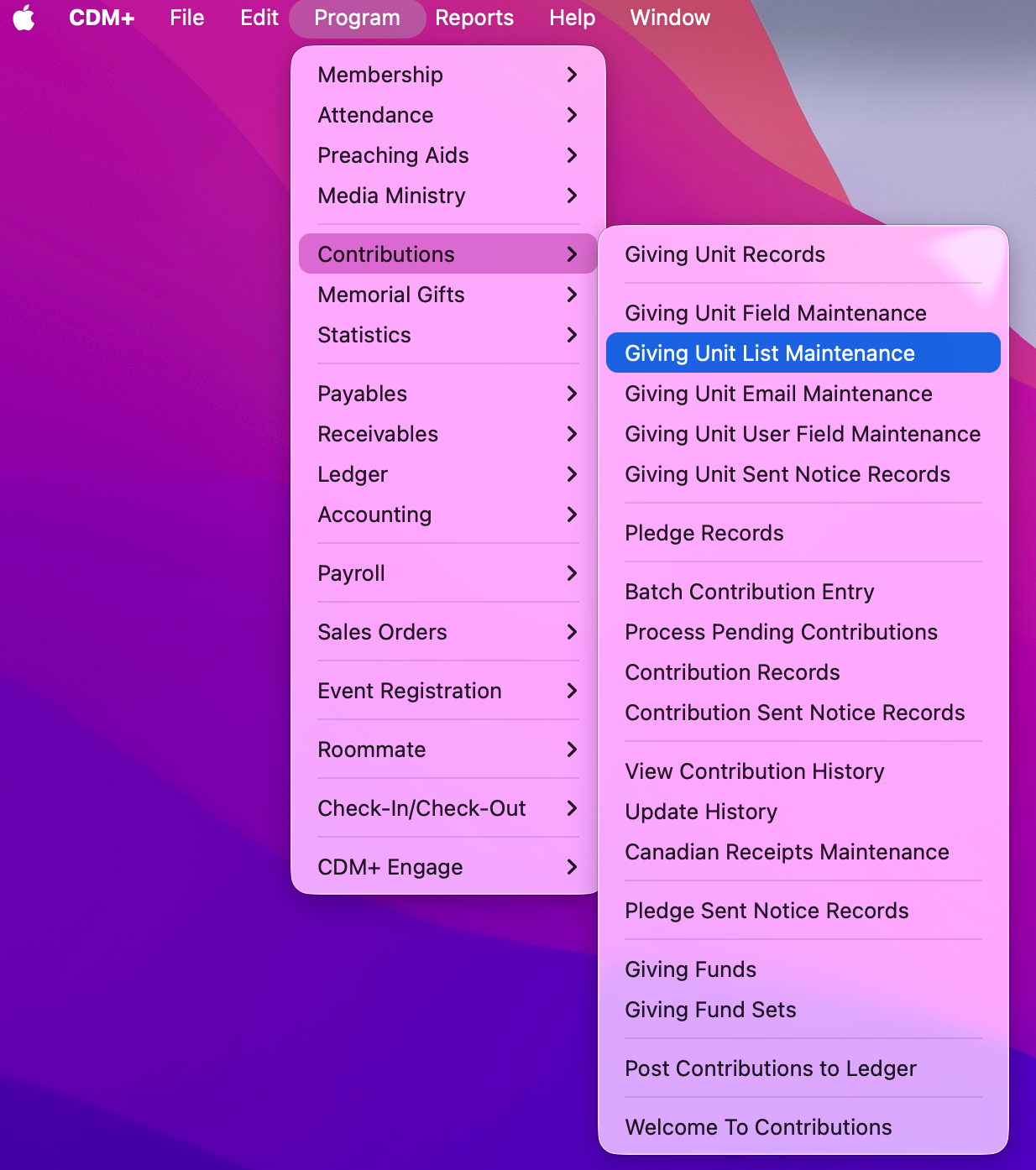
Then, you’ll want to put your giving units into the new age level groups. We can do this with the Giving Unit List Maintenance window. Go to Program → Contributions → Giving Unit List Maintenance.
-
In the Giving Unit List Maintenance window, select Age Level as the Code Type and then select an age range for the Code.
-20260429-174140.png?cb=ebbde174cbd83ee616d85944d8c08c72)
-
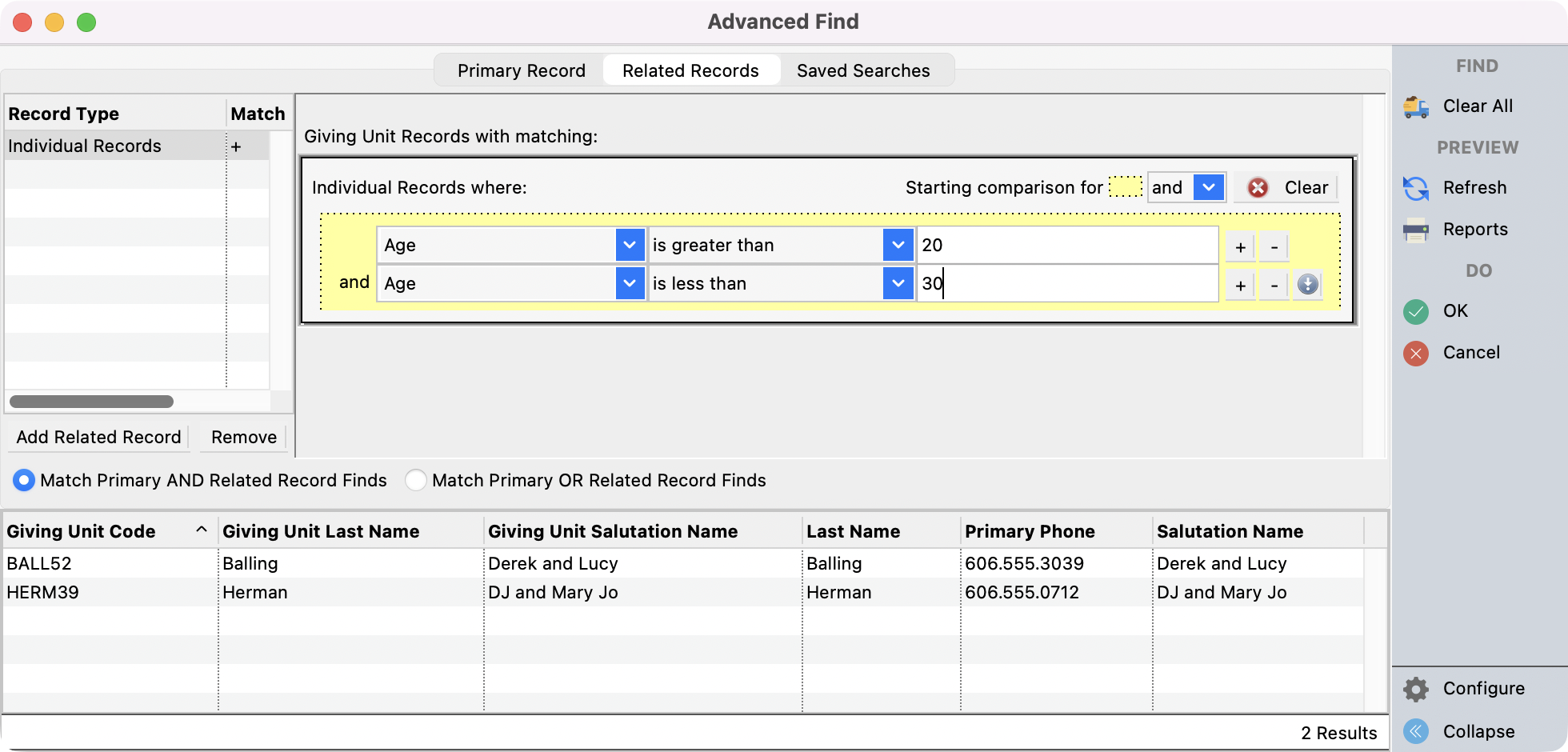
Set up an advanced find in order to select the records that you need. An example of the criteria to use is shown below.
-20260429-174648.png?cb=01d3f4dfc8e8212aa6618ad9ce67a9bf)
-
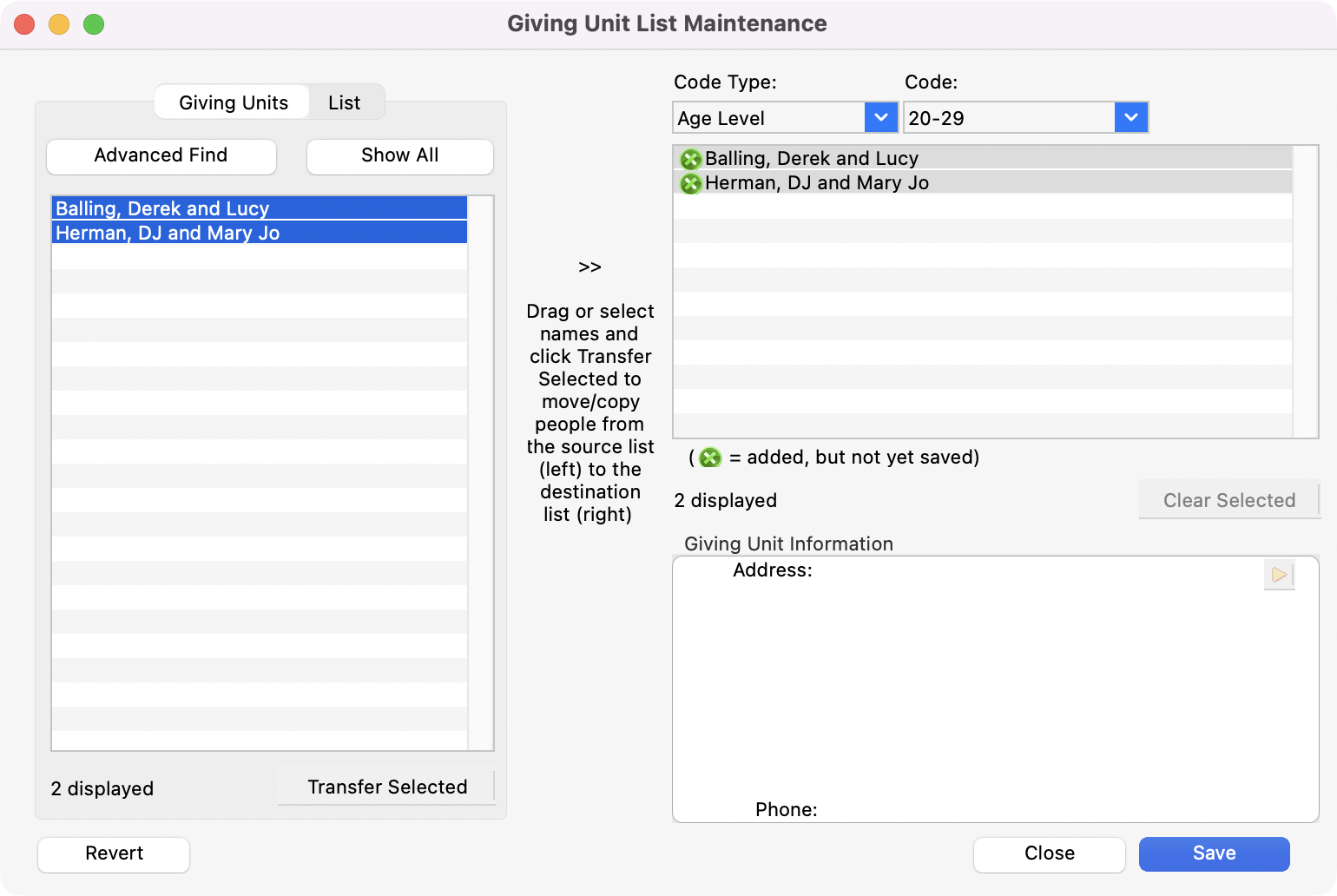
Transfer all records from the advanced find into the appropriate giving unit age group. Save after transferring.
-20260429-175427.png?cb=413583723d4d1316c30e998b80f09838)
-
Repeat steps 5 and 6 for each age level code you want to run the report on.
-
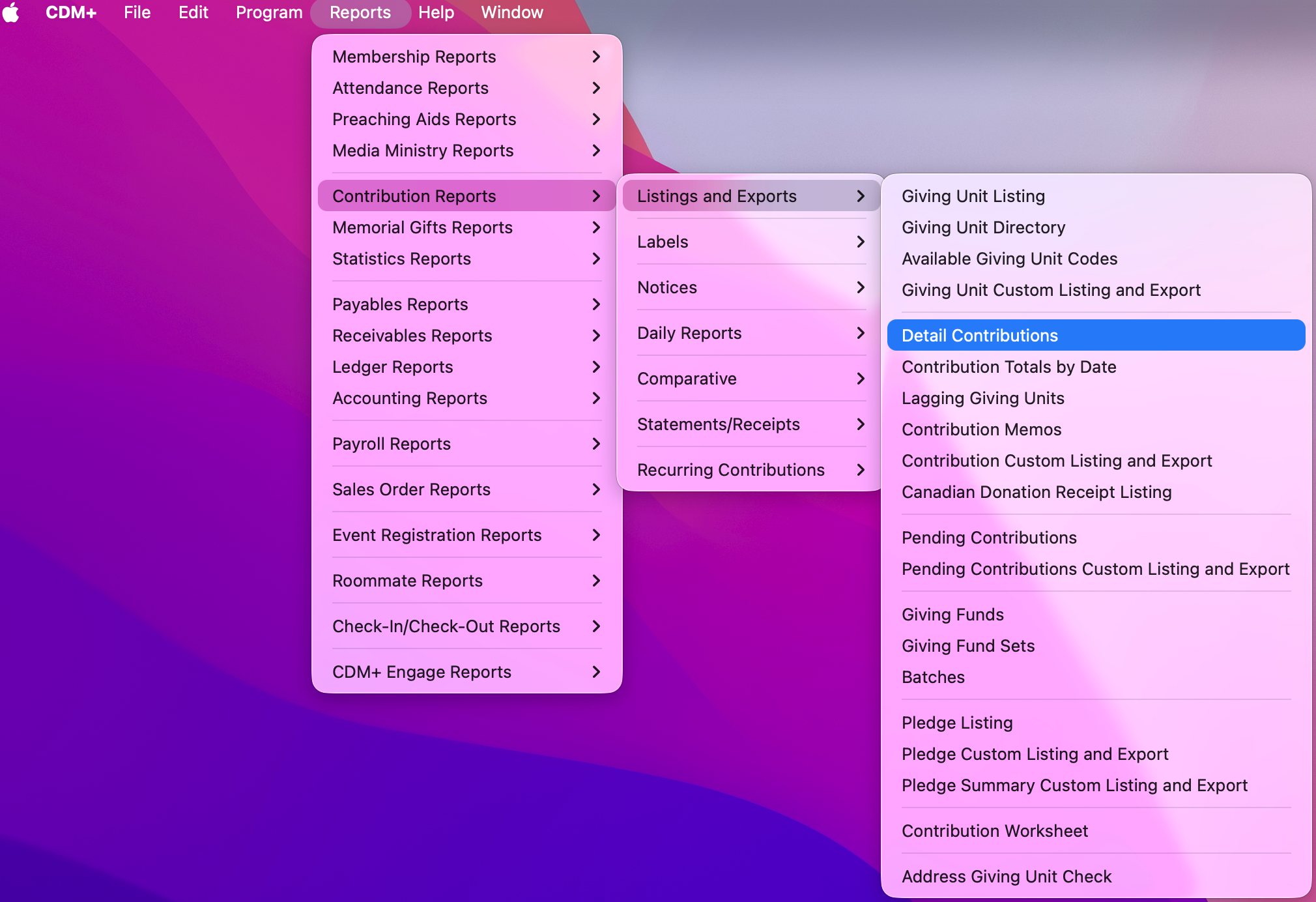
Now you can create and configure the report that you need to see giving by age range. Many different Contribution Reports can utilize the various age groups. For our purposes in this article, we will use the Detail Contributions Listing report. Go to Reports → Contribution Reports → Listings and Exports → Detail Contributions.
-
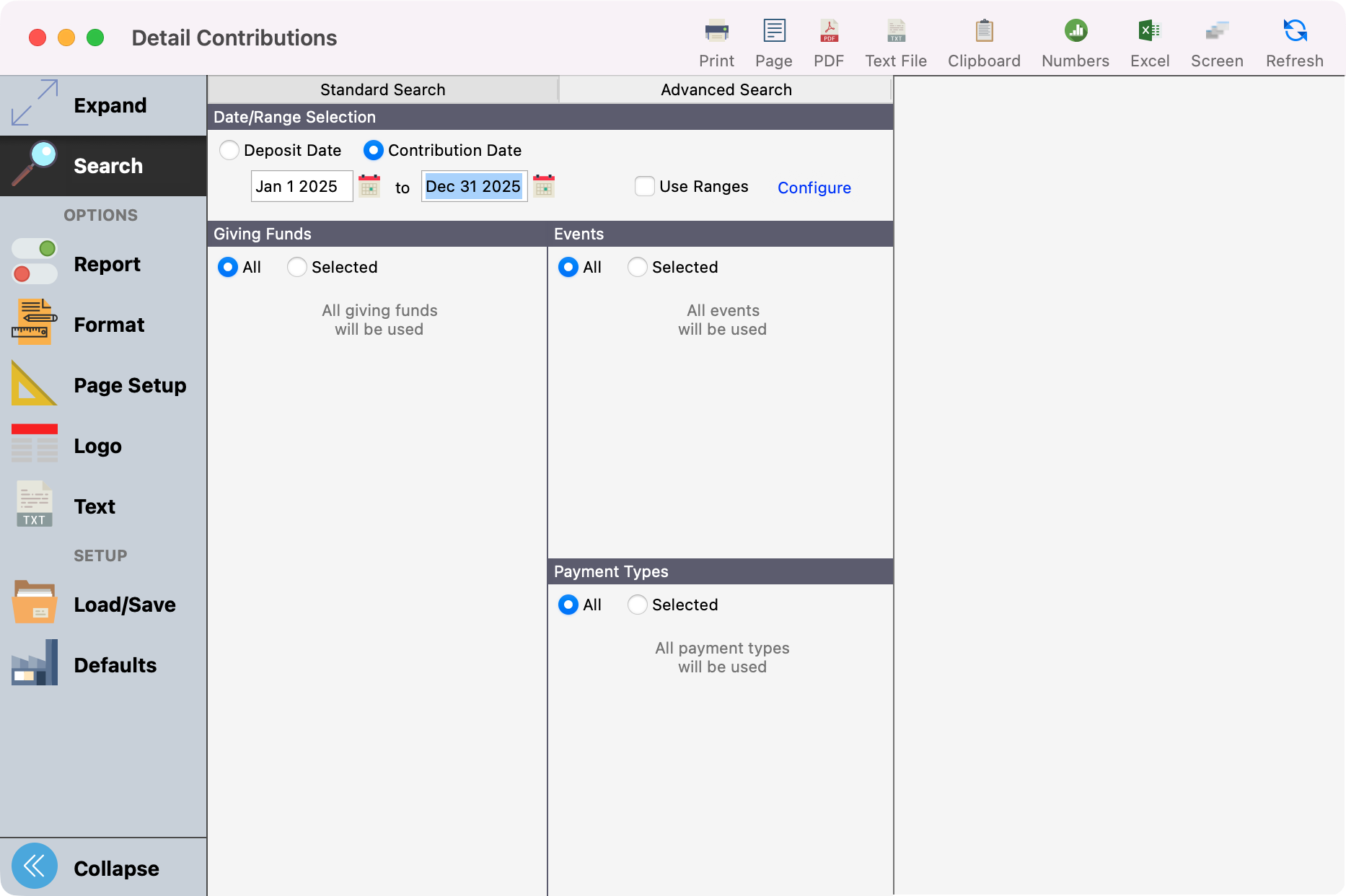
For your search, you will want to enter criteria for both the Standard and Advanced Search. For this example, in the Standard search, we’re just searching by Contribution Date.
-
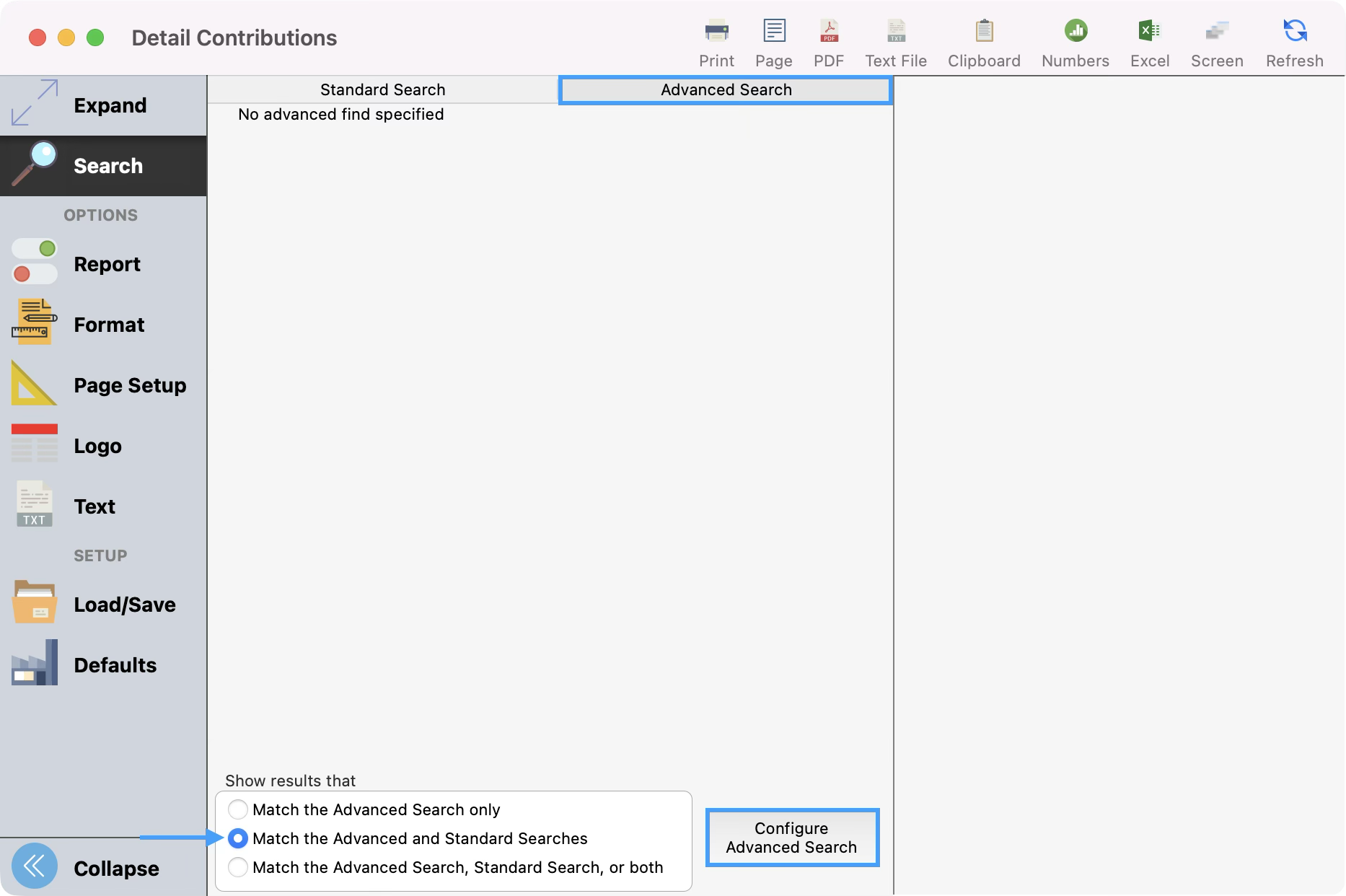
Once the standard search is created, click Advanced Search at the top. Click the radio button corresponding to Match Advanced and Standard Searches and then click Configure Advanced Search.
-
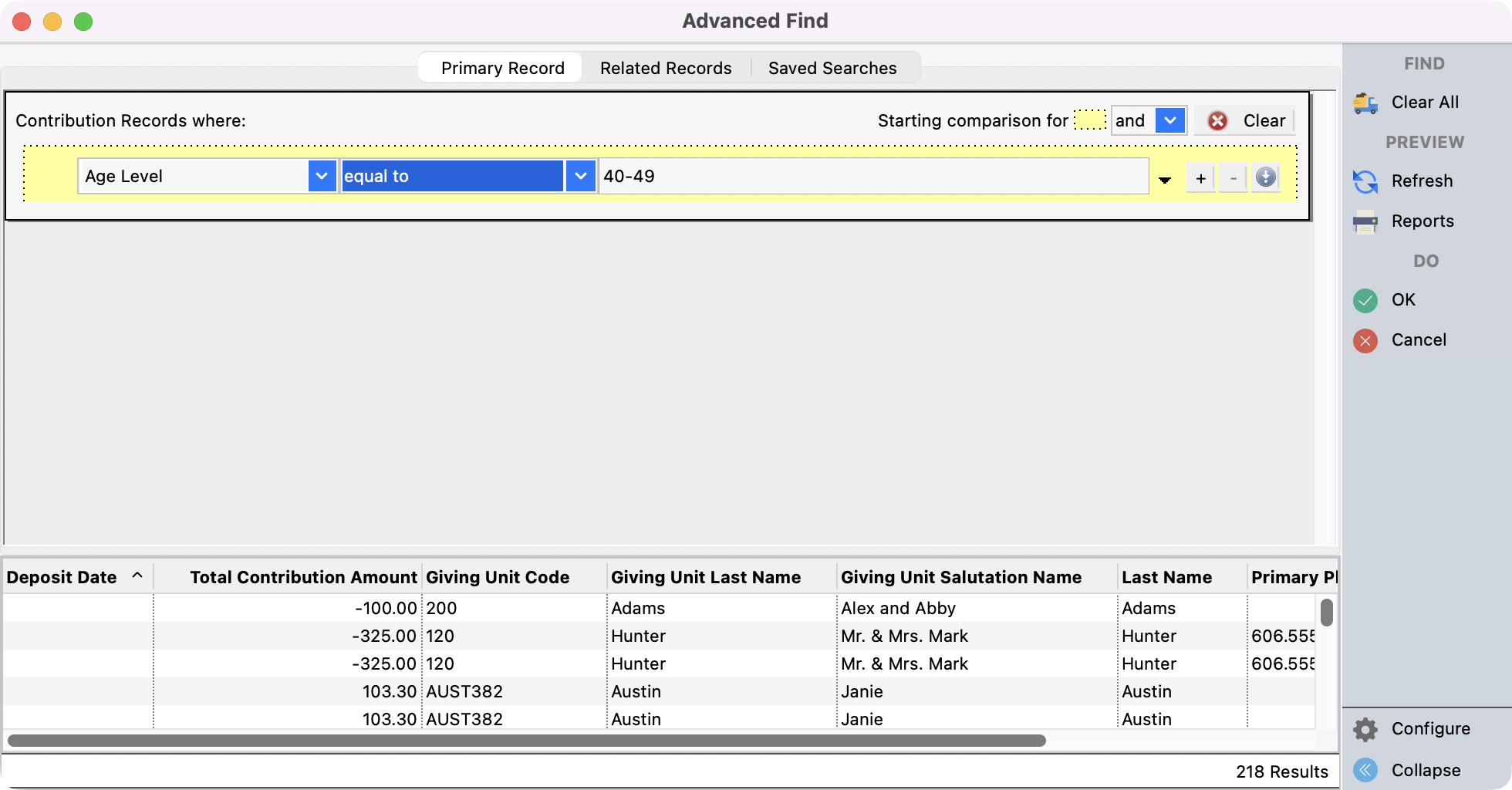
Configure the Advanced Find as shown below.
-
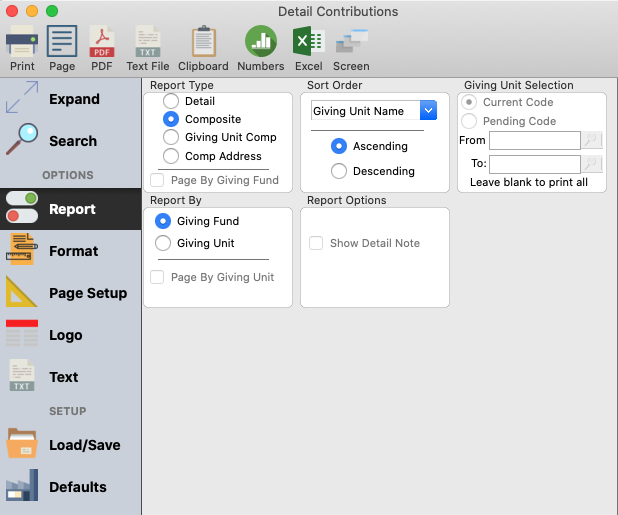
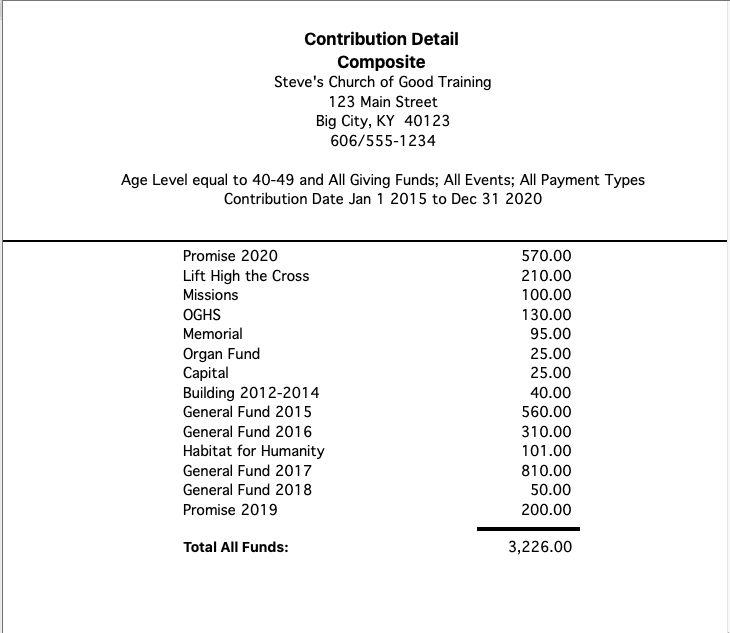
Depending on what/how much detailed information you require, set up the report options accordingly. In this example, the Detail Contributions Listing in the Composite by Giving Fund is set up.
-
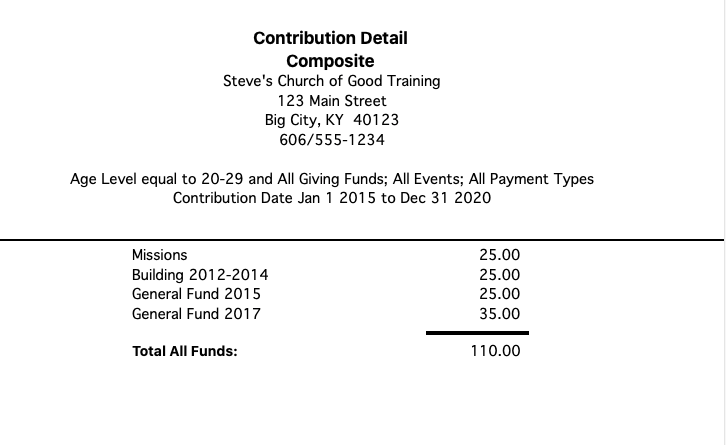
Here are some examples of the results.
-
As multiple age ranges have been set up, you will want to produce the same report for each age range. In short, if you set up 7 age ranges, you will produce 7 reports.
This example is specifically to determine financial support by age range. You could easily modify it to determine financial support by the deacon's board, or church council or any other Individual data element.